Home › Sleep › Insomnia
5 Reasons Why This “Anti-Cortisol” Gummy Actually Stops The 2-4am Wake-Ups

By Jessica Taylor
Contributing Health Editor
2 min read·September 13, 2026
For two years I woke up every night between 2 and 4am. Wired, but exhausted. Wide awake for no reason, staring at the ceiling until my alarm went off.
It was wrecking my life. I was a zombie all day — no energy, too foggy to hold a thought, running on empty from the moment I got up.
I tried everything:
Nothing worked. I'd pretty much given up.
Then one night, up at 3am again, I was scrolling and landed in a thread of women describing my exact nights.

Cortisol. That's what everyone was talking about. It sent me down a rabbit hole that finally explained everything — and led me to the thing that fixed it.
And the reason it worked is the exact opposite of everything I thought I knew.

Most sleep advice is written for people who can't fall asleep. That was never your problem.
Snapping awake in the middle of the night — wide awake, for no reason, at around the same time — is its own type of insomnia. Doctors call it sleep-maintenance insomnia.
It has a different cause than the type all the usual advice is aimed at. And that's why the usual advice hasn't fixed it.
So what is that cause? It has a name — and once you see it, everything else makes sense. ↓

Cortisol is more than just stress. It's your body's alarm hormone — its whole job is to jolt you awake.
It's supposed to stay low all night, then rise at dawn to get you up. Sleep researchers call that morning surge the cortisol awakening response.
In a lot of women over 40, that rhythm breaks. Cortisol starts spiking in the middle of the night instead.
And a cortisol spike does one thing very well. It wakes you up. Heart going, mind racing, wide awake at 3am. Wired but tired.
Why after 40? For your whole adult life, estrogen kept cortisol pinned down at night so you could sleep.
Somewhere after 40, estrogen dips — and that nightly brake goes with it. That's why sleep you never had to think about suddenly falls apart.
Which raises the question I hear most: if it's cortisol, why didn't the magnesium everyone swears by fix it? ↓
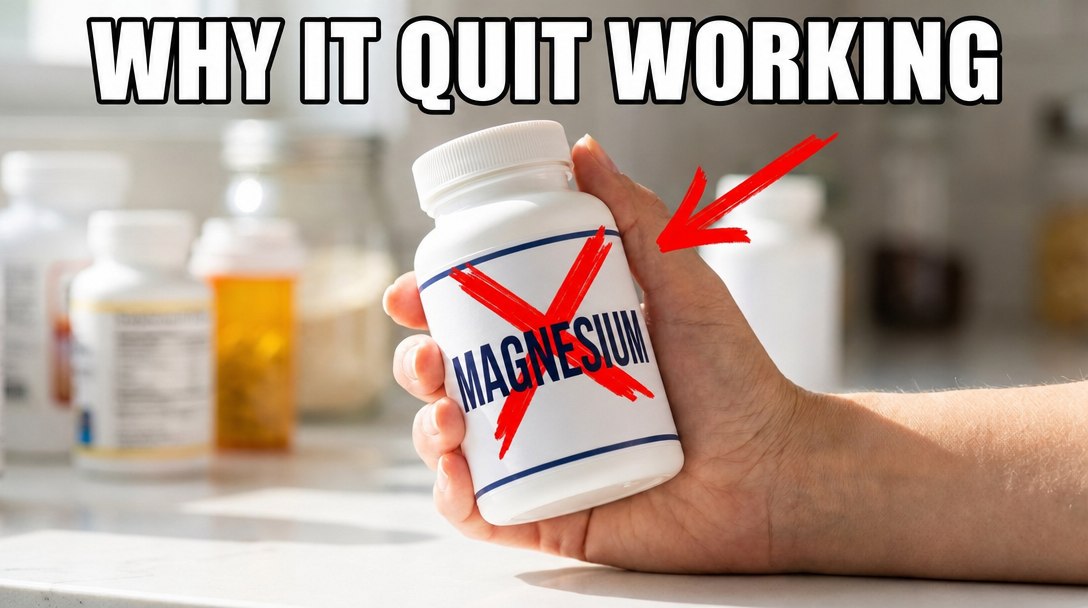
Every fix you've been handed was built for people who can't fall asleep — melatonin, magnesium, sleepy teas, sleep hygiene. None of it was ever meant for your situation. None of it touches the cortisol spike that's actually waking you up.
Take magnesium, the one everyone swears by. Magnesium is what your brain uses to shut off at night — your off switch.
But a body on alert does not want you falling asleep. So every time cortisol spikes, it burns through your magnesium and flushes it out when you pee.
That's why the magnesium helped for a few nights, then quit on you. It was working — the cortisol was just draining it faster than you could put it back.
Same reason melatonin didn't get you far. It helps you fall asleep. It does nothing about a cortisol spike three hours later.
So here's what actually works — and why it's two jobs, not one. ↓
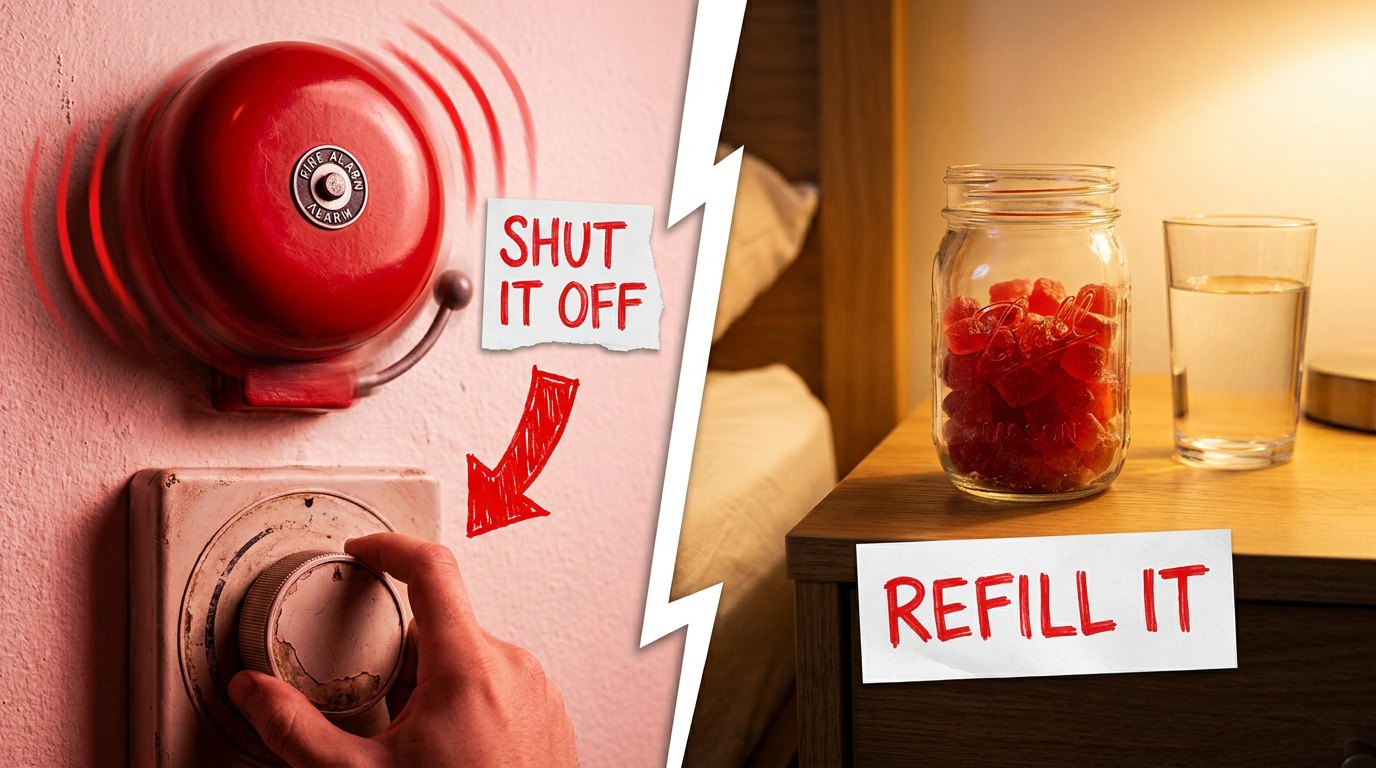
You need to shut the cortisol alarm off. And you need to refill what it drained. Both, at the same time. One without the other keeps failing.
That takes five ingredients working together:
You take one gummy about an hour before bed, and your body can finally shut itself off, the way it's supposed to.
And if you're wondering how fast you'd feel it — that's the part that surprised me most. ↓
Here's the part that surprised me most. Once your body has the right ingredients to push back on the nighttime cortisol, the spike settles fast.
You don't wait months. You'll feel it within the first week — the 2-4am wake-ups start losing their grip.
Within a few weeks, it just feels like your normal sleep came back.
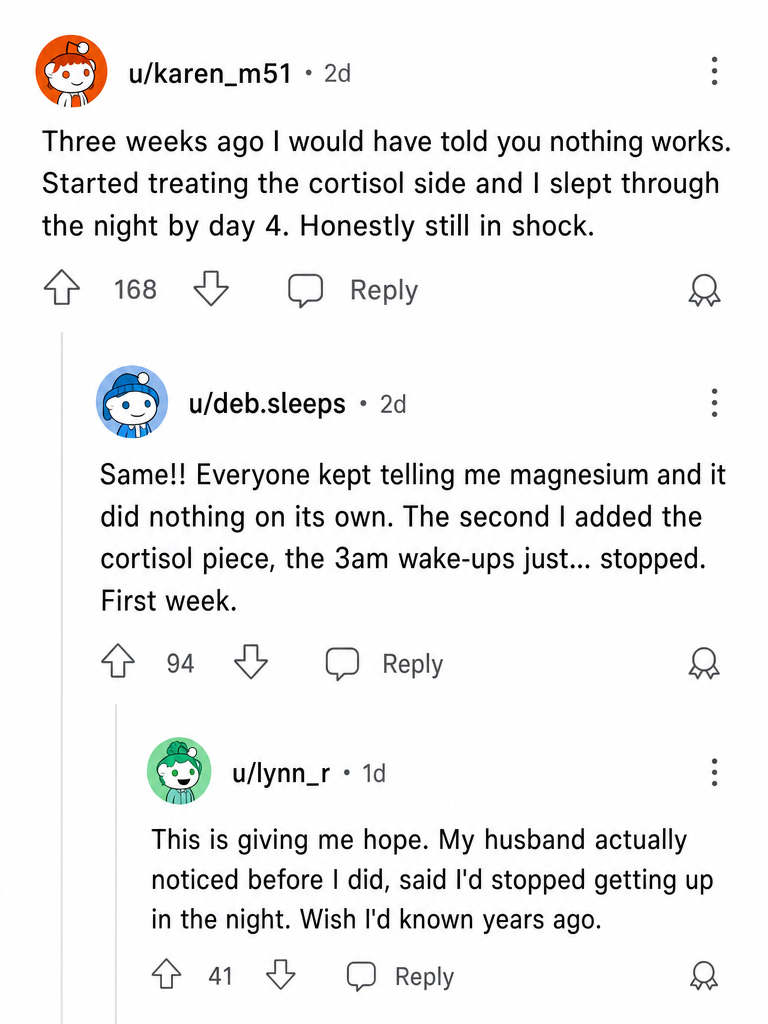
It's the same thing I keep seeing from other women who finally dealt with the cortisol:
You could buy the five ingredients separately instead — but that's over $75 a month for all five bottles. This is all of it, in one gummy.
And there's a 90-day money-back guarantee. If you don't feel anything, you get your money back.
Take it every night for 90 nights. Still waking up at 3am? Email us and you get a full refund. You don't even send the bottles back.
Try It Risk-Free


“I was waking up at 3am every single night, wide awake for hours. Somewhere in week two I slept straight through — first time in almost two years. I kept waiting for it to stop working like everything else. It hasn't.”
That’s the pattern this was built for. Most magnesium is a cheap form your body barely absorbs — and even the good forms get drained faster than you can refill them while cortisol is spiking. This shuts the drain off first (ashwagandha), then refills with all 10 forms plus the D3 and zinc that let them absorb. You weren’t wrong about magnesium. You were refilling a tank with the tap open.
On purpose. Melatonin helps you FALL asleep — that was never your problem. It does nothing about a cortisol spike three hours after midnight, and cortisol cancels melatonin anyway. Your 3am side needs the alarm turned down, not another knockout signal.
You don’t have to feel stressed — this was never about your mind or your day. Cortisol is your body’s wake-up chemical, and it runs on a body clock. For 40 years, another hormone kept it quiet at night. With that hormone gone, it fires early — while you’re asleep, when you can’t feel a thing. You never feel “stressed.” You just wake up at 3am. That’s why calmer routines and “reducing stress” never fixed it: it was never an emotional problem.
It’s normal for cortisol to rise at dawn — that’s the surge that gets you out of bed at 6 or 7. At 3am, three hours early, at the same time every night? That’s the rhythm misfiring — and it happens no matter how your day went.
No. It isn’t a sleeping pill and it isn’t habit-forming. It works by quieting the alarm that’s waking you and refilling the mineral your brain uses to switch itself off — so sleep happens the way it used to, and mornings feel like mornings again.
One gummy about an hour before bed, every night. Most women notice the 2-4am wake-ups losing their grip within the first week — coming later, then softer, then some nights not at all. Give it a few weeks for sleep to feel like yours again.
It’s non-hormonal, so it works alongside HRT — it handles the cortisol side that hormone therapy doesn’t. If you take any prescription medication, check with your doctor first, especially about the ashwagandha.
— Jessica
These statements have not been evaluated by the Food and Drug Administration. This product is not intended to diagnose, treat, cure, or prevent any disease. Individual results vary.