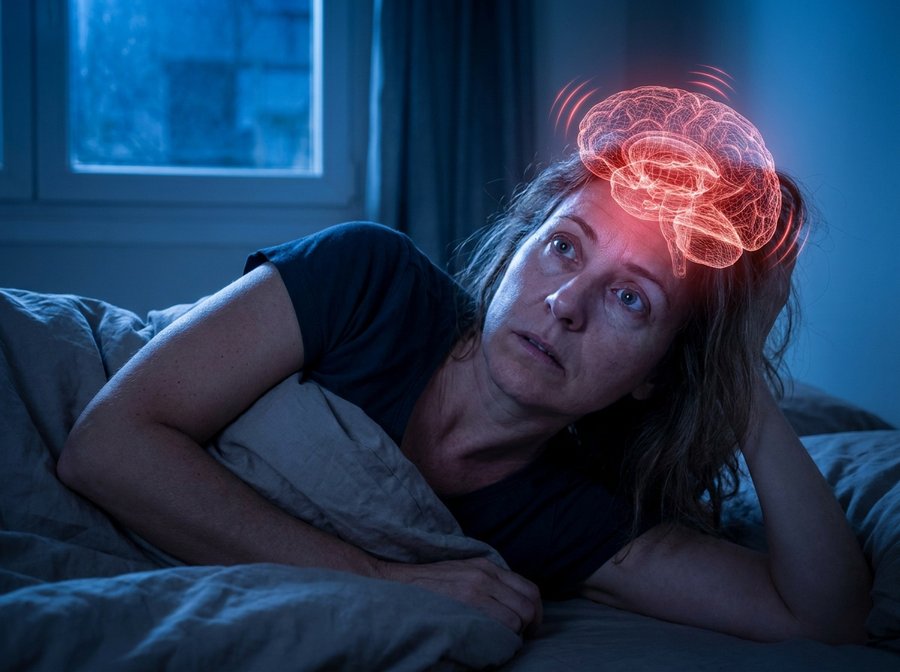
I'm Jessica. For almost two years I woke up at 3am, wired but exhausted, and couldn't get back to sleep. My days were a fog — no energy, no focus, nothing left for the things I cared about. Everyone said I was just stressed. I always knew it was something more.
I was right. And once I figured out what was really going on, I fixed it — and got my nights back. Here's exactly what I learned. ↓

If you wake up between 2 and 4am almost every night — no matter what you do — you don’t have ordinary insomnia. You have a different kind, and it has its own name: sleep-maintenance insomnia.
It has a completely different cause than the can’t-fall-asleep kind — which is exactly why every fix built for falling asleep did nothing for you.
The good news? There’s a reason it keeps happening — and a way to fix it. ↓

What’s actually waking you is cortisol — your body’s built-in alarm hormone, the one whose whole job is to jolt you awake.
It’s supposed to run on a schedule: low all night so you can sleep, then rising at dawn to get you up. Yours isn’t running on that schedule anymore — it’s spiking in the middle of the night, when it should be at its lowest. There’s a word for it: cortisol dysregulation.
It isn’t random. It’s a biological problem — a hormone firing at the wrong time.
But what if you’re not stressed at all — or you’ve already got it handled? ↓

This is the part that catches everyone off guard: you don’t have to be stressed for this to happen. It isn’t a lifestyle problem you can fix by slowing down. It’s a biological one.
You could have the calmest life in the world, do everything right, and the cortisol would still spike — because it’s your body’s chemistry that’s off, not your schedule. (And if you do have a lot going on, that only pours fuel on it.) This was never something you could meditate or routine your way out of.
Why did your body suddenly start doing this in the first place? ↓

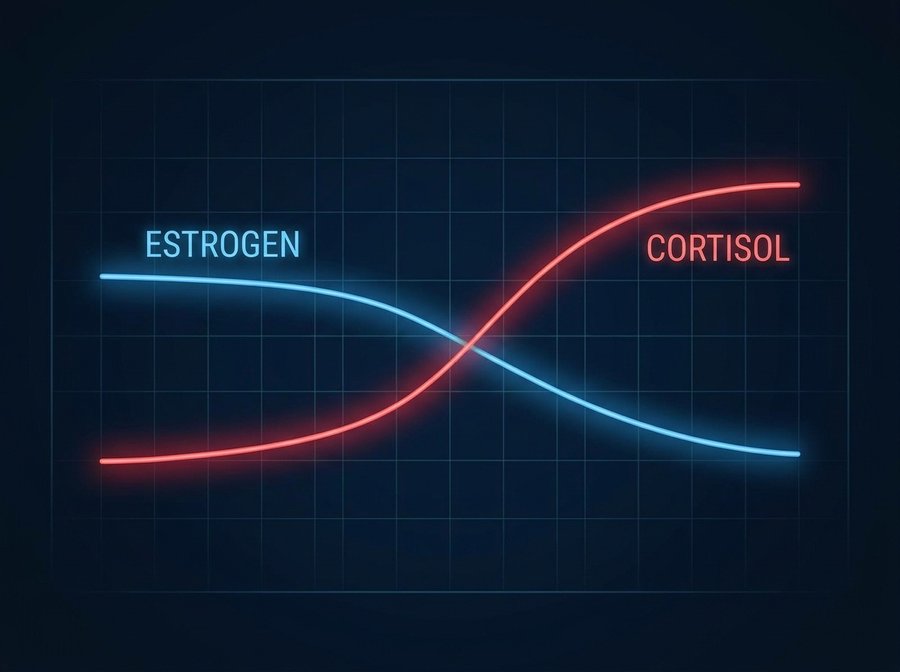
For most of your life, estrogen did something you never knew about: it kept cortisol pinned down at night so you could sleep. It was the brake on the alarm.
As you get older, estrogen starts to dip — and that brake goes with it. So cortisol spikes earlier and harder than it’s supposed to. That’s why these sleep problems tend to start later in life, seemingly out of nowhere.
And why hasn’t a single thing you’ve tried actually worked? ↓

Every fix you’ve been handed was built for people who can’t FALL asleep — melatonin, sleepy-time teas, sleep hygiene, no screens, a cooler room. Even a glass of wine or a sleeping pill to knock yourself out. That was never your problem.
None of it touches the cortisol spike that’s actually waking you. And until you deal with that root cause, these 3am wake-ups are going to keep happening — no matter what you throw at them.
Everyone swears by magnesium — but you’ll never guess why it didn’t work for you. ↓

Magnesium is the mineral your nervous system uses to calm down and switch off — so you probably tried it, and maybe it worked for a few nights.
But here’s the problem. Cortisol is your body’s alert system, and a body on alert does not want to go back to sleep — so it burns through your magnesium and flushes the rest out. You were refilling it while the cortisol drained it faster than you could keep up.
And without magnesium, your nervous system can’t fully rest.
Here’s what it actually takes to stop it for good. ↓

To stop the 3am wake-ups, two things have to happen together: calm the cortisol so it stops spiking, and refill the magnesium it’s been draining. One without the other keeps failing.
The gummy that finally did both for me is called WonderCalm. It’s built around exactly this — five ingredients that target the nighttime cortisol and put back what it takes:
One gummy before bed. No melatonin, no prescription, nothing habit-forming.
And how fast would you feel it? ↓
I expected it to take months. But I noticed a difference in under a week — I started sleeping past my usual 3am wake-up.
From there it built on itself. Each night I stayed asleep a little longer and woke up a little less — until one morning I realized I hadn’t woken up at 3am at all, and couldn’t remember the last time that happened.
But you don’t have to take my word for it. ↓

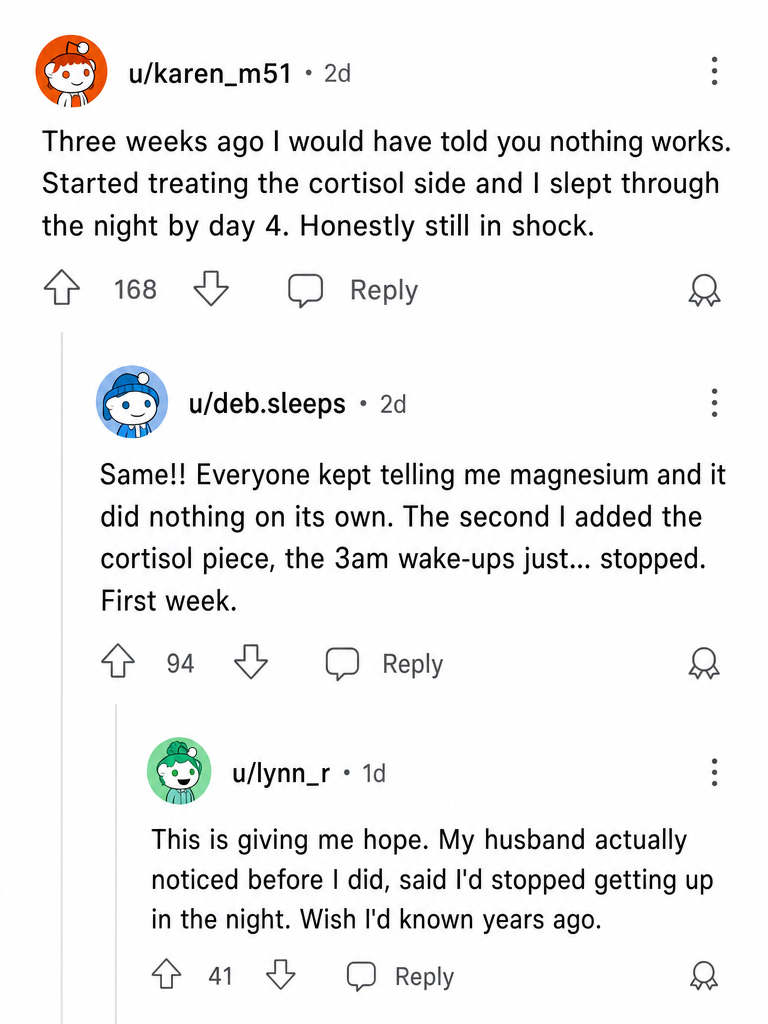
I’m not the only one. Once women deal with the cortisol instead of taking one more thing that knocks them out, you see the same thing over and over — their body is finally able to shut off and sleep through the night:
And WonderCalm comes with a 90-day guarantee. Take it every night for three months. If you’re still waking up at 3am, you get every penny back. No hoops.
Take it every night for 90 nights. Still waking up at 3am? Email us and you get a full refund. You don't even send the bottles back.
Try It Risk-Free
“I was waking up at 3am every single night, wide awake for hours. Somewhere in week two I slept straight through — first time in almost two years. I kept waiting for it to stop working like everything else. It hasn't.”
That’s the pattern this was built for. Most magnesium is a cheap form your body barely absorbs — and even the good forms get drained faster than you can refill them while cortisol is spiking. This shuts the drain off first (ashwagandha), then refills with all 10 forms plus the D3 and zinc that let them absorb. You weren’t wrong about magnesium. You were refilling a tank with the tap open.
On purpose. Melatonin helps you FALL asleep — that was never your problem. It does nothing about a cortisol spike three hours after midnight, and cortisol cancels melatonin anyway. Your 3am side needs the alarm turned down, not another knockout signal.
You don’t have to feel stressed — this was never about your mind or your day. Cortisol is your body’s wake-up chemical, and it runs on a body clock. For 40 years, another hormone kept it quiet at night. With that hormone gone, it fires early — while you’re asleep, when you can’t feel a thing. You never feel “stressed.” You just wake up at 3am. That’s why calmer routines and “reducing stress” never fixed it: it was never an emotional problem.
It’s normal for cortisol to rise at dawn — that’s the surge that gets you out of bed at 6 or 7. At 3am, three hours early, at the same time every night? That’s the rhythm misfiring — and it happens no matter how your day went.
No. It isn’t a sleeping pill and it isn’t habit-forming. It works by quieting the alarm that’s waking you and refilling the mineral your brain uses to switch itself off — so sleep happens the way it used to, and mornings feel like mornings again.
One gummy about an hour before bed, every night. Most women notice the 2-4am wake-ups losing their grip within the first week — coming later, then softer, then some nights not at all. Give it a few weeks for sleep to feel like yours again.
It’s non-hormonal, so it works alongside HRT — it handles the cortisol side that hormone therapy doesn’t. If you take any prescription medication, check with your doctor first, especially about the ashwagandha.
These statements have not been evaluated by the Food and Drug Administration. This product is not intended to diagnose, treat, cure, or prevent any disease. Individual results vary.